


Investing & Markets
HD Fire Protect IPO Closes at 131×: Final Allotment Odds, GMP, and the Listing-Day Playbook
HD Fire Protect IPO closed 131.73×. Retail allotment odds, how to check allotment on Oct 16, GMP decoded, and a listing-day playbook for Oct 21.
Quick answer: HD Fire Protect's ₹712.31-crore IPO closed on 15 October 2026 at 131.73× — QIBs rushed in on the final day at 256.65×, retail ended at 30.55×. Allotment is expected on 16 October, refunds and share credits on 19 October, listing on 21 October. Retail applicants face roughly 1-in-30 odds per single-lot bid in SEBI's lottery.
The final numbers: 131.73× in three days
The bidding window for HD Fire Protect — open from 13 to 15 October 2026 — is closed, and the final picture is one of the strongest subscriptions seen on the mainboard this season.
Total subscription: 131.73×
Qualified Institutional Buyers (QIBs): 256.65×
Non-Institutional Investors (NIIs): 203.21×
Retail Individual Investors (RIIs): 30.55×
Employees: 23.61×
The day-by-day progression tells its own story: 4.66× on day one, 16.53× on day two, then 131.73× at close. QIBs were sitting at just 1.49× on day two and poured in during the final hours — a classic mainboard pattern, since institutions typically wait to see price-band interest consolidate before committing.
The issue itself: ₹712.31 crore, priced in a band of ₹258–271 per share, with a lot size of 55 shares — which means a retail applicant blocked ₹14,905 at the upper band. All of it was an offer for sale; we will come back to why that matters in a moment.
Your allotment odds, in plain words
For most readers of this site, the retail bucket is what counts — and it closed at 30.55×. What does that mean for you? Roughly, 30.55× means about one allotment for every 30 valid single-lot applications, if everyone applied with one lot. The maths is not literally one-in-thirty, because applicants who bid for multiple lots get their extra lots rejected — in the retail lottery you get either one lot or nothing — but the "one in thirty" intuition is close enough for planning your expectations.
Here is how SEBI's lottery allotment works, in case you applied:
1. Only bids at or above the cut-off price count for the lottery (if you bid below the final discovered price, you get rejected).
2. Every valid applicant with a one-lot bid goes into the lottery pool.
3. Allotments are drawn one lot at a time until the shares run out.
4. Applying with two lots does not double your chances the way people think — in the retail lottery, each application is treated as one ticket for one lot (the second lot is refunded to you unallotted in oversubscribed issues).
So the famous "one lot from ten demat accounts" strategy is simply a way of buying ten lottery tickets instead of one — the only mechanical way retail investors improve their odds. Each account needs its own valid PAN and UPI/ASBA application.
How to check your allotment on 16 October
The basis of allotment is expected to be finalised on Friday, 16 October 2026. Check your status that afternoon in two places:
1. The registrar's website — MUFG Intime India Pvt Ltd is the registrar for this issue. Search for their IPO allotment status page, select "HD Fire Protect Limited", and check with your PAN, application number, or DP/Client ID.
2. The exchange websites — both BSE and NSE host allotment status pages where you can look up your application.
Refunds for unallotted bids are expected to start on 19 October, and shares for successful allottees should be credited to demat accounts the same day. If you do not get allotment, your blocked amount is simply released back to your bank account through the ASBA/UPI process — nothing more to do.
GMP at ₹90: what it means (and what it does not)
The grey market premium quoted for HD Fire Protect is around ₹90 per share — measured against the ₹271 upper band, that implies a possible listing near ₹361, roughly 33% higher.
The part that actually matters: the grey market is unregulated. Treat the GMP as a thermometer, not a contract:
• A high, stable GMP suggests strong listing-day sentiment, but it has no bearing on what the company is actually worth.
• Quotes swing wildly between dealers and trackers — two sources can show very different numbers for the same IPO.
• There are documented cases of IPOs with fat GMPs that listed flat or below the issue price. Sentiment is not valuation.
If the GMP influences your excitement, that is human — but it should never influence a decision to hold or sell on listing day. The checklist at the end of this article gives you a calmer framework.
Why the 100% OFS structure matters
HD Fire Protect's ₹712.31-crore issue was entirely an offer for sale (OFS). Promoter shareholders — Harish Narshi Dharamshi (shares worth about ₹243.46 crore) and Kusum Harish Dharamshi (shares worth about ₹468.85 crore) — sold their existing shares to the public. The company itself received no fresh capital.
What does that change for an investor?
• The IPO does not fund expansion, debt repayment, or R&D — those growth plans, if any, must be funded from the company's own cash flows going forward.
• An OFS is fundamentally an exit (partial or full) by existing shareholders at the IPO price. It is not a red flag by itself — promoters often list via OFS to provide liquidity — but it means you should judge the company on its standalone financials and prospects, since your money goes to the selling promoters, not into the business.
• Dilution math still matters: at the ₹271 upper band, the issue valued the company at roughly ₹4,749 crore market capitalisation, and the price-to-earnings ratio works out to about 40.7× FY26 diluted earnings — below the industry peer average P/E of about 63× reported in the issue documents.
None of this is advice to buy or avoid — it is context for reading the offer document rather than the subscription numbers alone.
The listing-day playbook for 21 October
HD Fire Protect is expected to list on BSE and NSE on Wednesday, 21 October 2026. Whether you are allotted shares or watching from the sidelines, a disciplined approach beats adrenaline:
1. Watch the pre-open session (9:00–9:45 AM), not the noise. The pre-open call auction discovers the listing price — your first real data point, far more informative than the GMP.
2. Expect circuit-filter-driven volatility. It is normal for a hot IPO to hit the upper circuit early and for liquidity to dry up while locked.
3. Decide your plan before the market opens. If you are an allottee, write down the price at which you would book a profit and the price below which you would hold. Listing-day decisions made in the moment are usually the worst ones.
4. Do not chase it if you missed the IPO. A stock that lists at a 30%+ premium and runs into an upper circuit is the most expensive place to start a position. If you like the business, waiting for the first consolidation usually offers a better entry.
5. Remember the fundamentals. Strong subscription (131.73×) measures demand for the offer, not the quality of the business. Your holding decision should rest on the company's financials, the sector's prospects, and your own risk appetite — never on day-one euphoria.
The business, in one minute
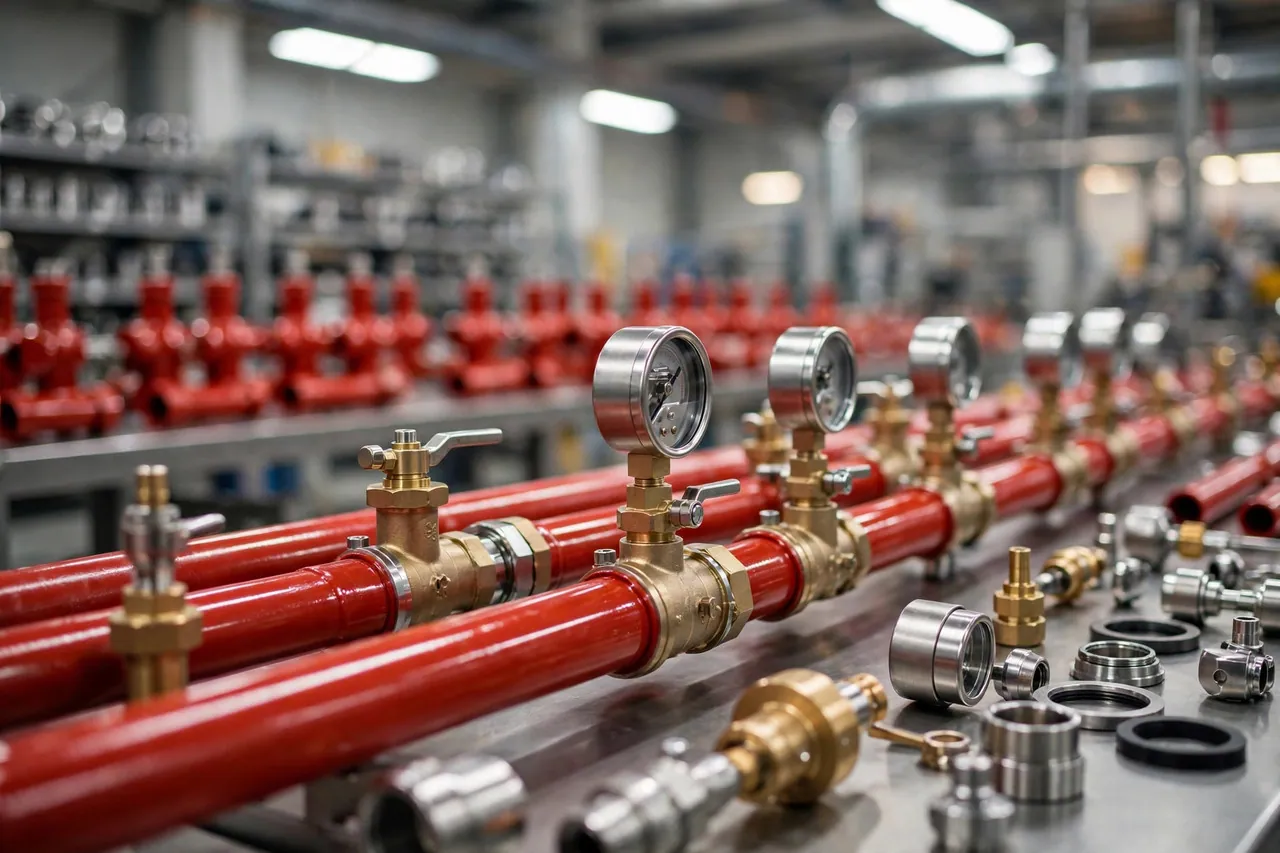
For readers catching up: HD Fire Protect makes fire-protection equipment — sprinklers, alarm and deluge valves, foam and gas suppression systems — from plants in Jalgaon and Thane, Maharashtra. Its products are exported to more than 90 countries with international certifications (UL, FM, CE, VdS). Its offer documents cite it as India's second-largest fire-protection equipment maker by FY25 operating income, and the largest exporter by value. Installations include the new Parliament building, the Jamnagar refinery, and Sriharikota. FY26 revenue was about ₹489.82 crore, PAT roughly ₹116.79 crore.
Frequently asked questions
HD Fire Protect IPO — frequently asked questions
When will the HD Fire Protect IPO allotment be announced?
What were the final subscription numbers for the HD Fire Protect IPO?
What does the ₹90 GMP mean for the listing price?
Why did the subscription jump so much on the last day?
If I do not get allotment, when is my money released?
When does HD Fire Protect list on the stock exchange?
Your action checklist
Your listing-week action plan
1. Note 16 October on your calendar — check allotment on MUFG Intime's website or the BSE/NSE pages with your PAN or application number. 2. If allotted: write down your profit-booking and hold-decision price levels before listing day; decide from the pre-open session price, not from the GMP. 3. If not allotted: expect your blocked amount to be released from 19 October; do nothing, the ASBA/UPI process handles it automatically. 4. Do not buy in panic on listing day — a circuit-locked stock after a strong listing is a poor entry point; study the business first if you want in later. 5. Read the offer document fundamentals (FY26 revenue ~₹489.82 crore, PAT ~₹116.79 crore, P/E ~40.7× at upper band) before making any hold-or-sell decision — subscription hype is not a valuation.
Learn MoreThis article is for educational purposes only and is not financial advice. Please consult a SEBI-registered investment adviser for personalized guidance. Investments are subject to market risk.
Sources: 5paisa IPO subscription tracker (15 Oct 2026, 6:05 PM IST); Economic Times; Moneycontrol; NDTV Profit via InvestorGain GMP tracking; offer document details via ET Now and ipoplatform.
Discussion
KEEP EXPLORING
More in Investing & Markets Your next good read.
Investing & Markets
SEBI Wants LTCG Tax Scrapped for Foreign Investors: What It Means for You
6 min read
Investing & MarketsFPIs Sold ₹5,615 Crore of G-Secs in October — Third Straight Month
6 min read
Investing & MarketsSEBI Eases FPI KYC Rules From December 1: What It Means for Your SIP and Stocks
6 min read
Investing & MarketsSEBI's New 3:30 PM Closing Auction: CAS Rules, Explained
8 min read