


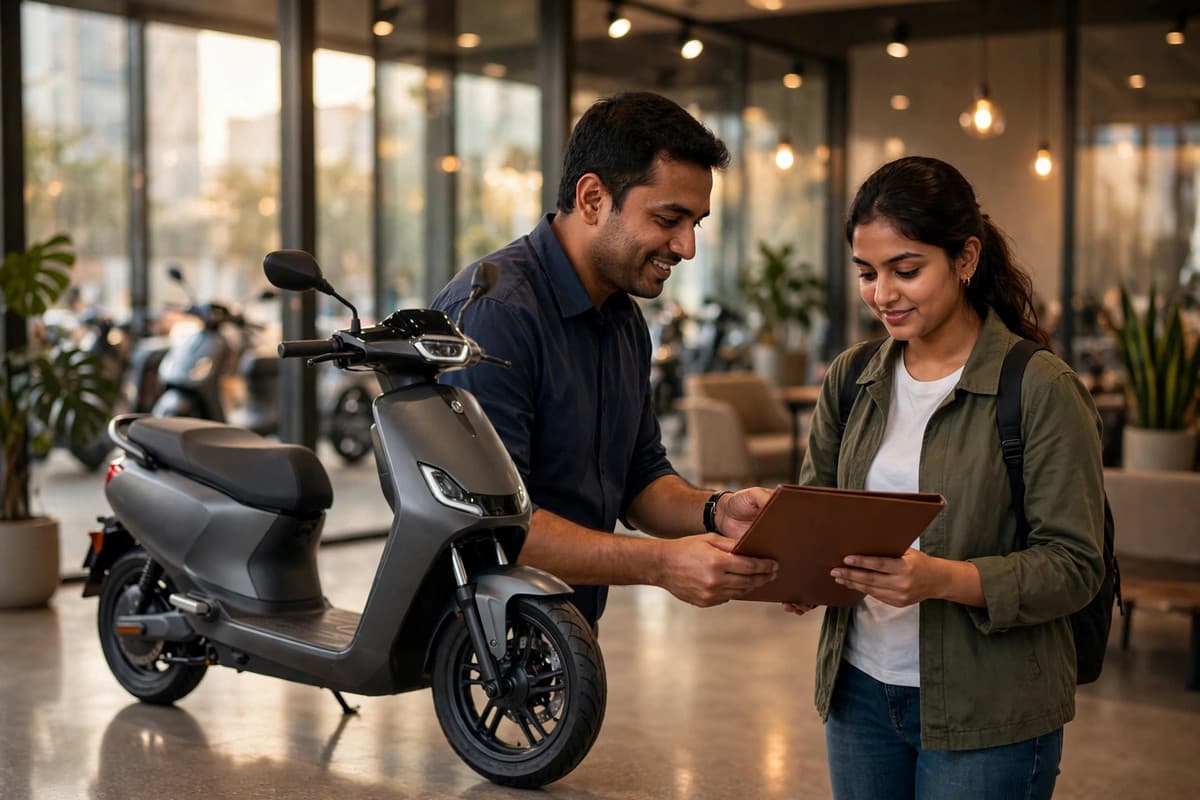
Rohan, 27, picked up his new 110cc scooter last week. The insurance line on the dealer's bill was bigger than he expected — and the reason was not the scooter. A rule changed in August, and most guides online still carry the old one.
Quick Answer: From 4 August 2026 the Supreme Court requires new two-wheelers to carry six years of third-party cover, up from five (cars: four years, up from three). Third-party premium is government-fixed — ₹3,851 for five years on a 75–150cc bike, plus 18% GST — but the six-year price is not yet notified, so check the term on your dealer invoice.
What changed on 4 August 2026
The Supreme Court, in National Insurance Co. Ltd. v. Thungala Dhana Laxmi (2026 INSC 793), directed that third-party insurance for new two-wheelers must run six years, and for new cars four years — one year more than before. The bench was Justices Sanjay Karol and Prashant Kumar Mishra. The old rule came from the Court's 2018 order: five years for new two-wheelers, three for new cars, paid upfront. Eight years on, the Court noted, a large number of vehicles still run uninsured — about 16.54 crore of India's 30.48 crore registered vehicles, roughly 56%. The direction applies only to new purchases; a bike bought earlier on a five-year policy is not affected. The same order also directed the four-layer motor policy structure effective 15 December 2026 — covered in our earlier guide; this article is only about the longer tenure.What the fixed part of your bill is
Third-party premium is not set by insurers. The government fixes it, and it is identical at every insurer, under the Motor Vehicles (Third Party Insurance Base Premium and Liability) Rules, 2022 (G.S.R. 394(E)), in force from 1 June 2022. For a new bike, the five-year single premium — the last notified table — is: - Up to 75cc: ₹2,901 (₹3,423 with 18% GST) - 75–150cc: ₹3,851 (₹4,544 with GST) - 150–350cc: ₹7,365 (₹8,691 with GST) - Above 350cc: ₹15,117 (₹17,838 with GST) One-year rates for renewals are ₹538, ₹714, ₹1,366 and ₹2,804 for the same slabs. One warning: no six-year premium table has been notified yet. The five-year single premium is already loaded — ₹3,851 for a 75–150cc bike is more than five times the annual ₹714 (₹3,570) — so you cannot work out the six-year price by adding one year. Do not accept a dealer quote that presents a computed six-year total as the official rate.The worked example: Rohan's 110cc scooter
Rohan's scooter costs ₹80,000 ex-showroom. His first bill, on the last notified rates: Third-party cover, five-year single premium (75–150cc slab): ₹3,851, plus 18% GST of ₹693 — ₹4,544. This is the fixed part; no insurer can charge a different TP premium for the same engine size. Compulsory personal accident cover for the owner-driver: ₹15 lakh of cover at ₹750 a year, fixed by IRDAI since 2018. Because the policy runs five years, it is collected for the full term: ₹3,750, plus 18% GST of ₹675 — ₹4,425. Skip this line if you already hold a standalone personal accident policy of ₹15 lakh or more. So the fixed part is ₹4,544 + ₹4,425 = ₹8,969. Own-damage cover — the part that pays for damage to his own scooter — is priced by each insurer. For a new 110cc scooter, expect roughly ₹1,200–₹2,500 for a year. That puts the first bill at about ₹10,169–₹11,469, or ₹5,744–₹7,044 if he already holds a ₹15 lakh PA policy. For the sixth year, the only honest illustration is the annual rate: ₹714 plus GST is ₹843. Treat that as a rough guide only — the notified six-year premium may be loaded differently.TP-only vs comprehensive: which fits which rider
Three ways to insure the bike. The weights below are ours, dated 12 November 2026: legal compliance 30%, protection for your own bike 30%, cost 25%, claim simplicity 15%. TP-only is the cheapest option and the legal minimum. It pays for death, injury or property damage you cause to others. It pays nothing for your own bike — not theft, not an accident, not a flood. Comprehensive is TP plus own-damage in one policy. It costs more, but it is the only option that covers your own bike. On a new bike bought on a loan, most lenders expect comprehensive cover. Standalone own-damage plus a separate TP policy gives the same cover, split across two policies — useful when you want to renew own-damage separately. Own-damage can be one year even when TP runs six. There is no best option in general. A new bike on a loan points to comprehensive. An old, low-value scooter can defensibly run on TP-only — but that is a choice about risk, not a saving: one accident without own-damage cover can cost more than years of premiums.The invoice checklist: five checks before you pay
1. The term. The policy must say six years of third-party cover for a new bike. If it still says five, ask why. 2. The TP premium. Match it against the government table above for your engine size, plus 18% GST. Any other number is wrong. 3. The personal accident line. Check whether ₹750 a year has been added, and whether you already hold a ₹15 lakh PA policy. 4. The own-damage part. Check its tenure — usually one year — and the IDV. The IDV can sit within a 15% band of the standard depreciated value; a lower IDV cuts the premium but also cuts a theft or total-loss payout. 5. The no-claim bonus. NCB, up to 50%, applies only to the own-damage premium — never to third-party premium.What is not true yet
Two claims circulating are not rules. "No insurance, no fuel": the Court asked IRDAI and the road transport ministry to design a pilot linking fuel sales to valid insurance. No notification makes fuel denial operational. And electric two-wheelers have separate TP slabs by motor power, not engine size — no verified figures were available for this article, so none are quoted.Does the six-year rule apply to my existing bike?
What if I already have a ₹15 lakh personal accident policy?
Is own-damage cover compulsory?
What happens if I ride without third-party insurance?
Ready to start?
Before you pay the dealer, check the invoice shows six years of third-party cover and that the TP premium matches the government table for your engine size. Follow @myfwindia on Instagram for the daily checklist version of this guide. Get the myfw app on Google Play — 22+ calculators in your pocket.
Learn MoreEducational content only — not financial advice. Consult a SEBI-registered investment adviser for personal guidance; investments are subject to market risk.
Supreme Court order, 4 Aug 2026, National Insurance Co. Ltd. v. Thungala Dhana Laxmi (2026 INSC 793), reported by Moneycontrol, 4 Aug 2026, 17:45 IST. Motor Vehicles (Third Party Insurance Base Premium and Liability) Rules, 2022 (G.S.R. 394(E)), in force 1 June 2022. IRDAI circular IRDAI/NL/CIR/MOTP/158/09/2018 (compulsory PA cover ₹750/year). SMC Insurance, "New Bike Insurance Rules 2026" (six-year premium schedule not yet notified).