


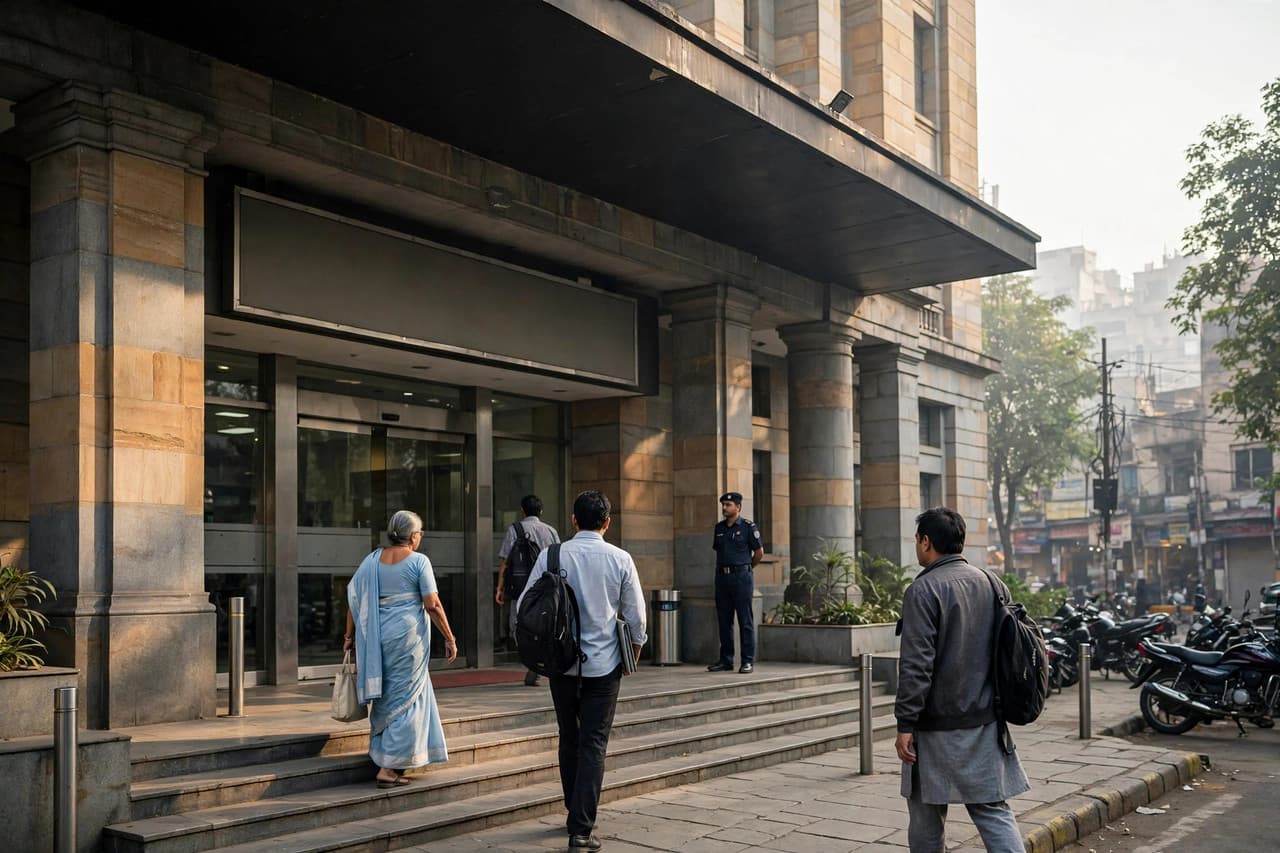
You will rarely see this in your lifetime: banks open on a Sunday. Today — Sunday, 27 September 2026 — public sector banks and Regional Rural Banks (RRBs) across India are open for business, on explicit instructions from the Reserve Bank of India. The reason: a proposed three-day nationwide bank strike from 28 to 30 September 2026 that could shut PSU bank branches for three straight working days.
If you have any branch-dependent banking work — a locker visit, a demand draft, a KYC update, a big cash deposit — today is your window. Here is exactly what is happening, what is open and closed, and what to get done before the shutters come down.
Bank employee unions, under the United Forum of Bank Unions (UFBU), have called a three-day "stay-out" strike from Monday 28 September to Wednesday 30 September 2026. The All India Bank Officers' Association (AIBOA) has confirmed its members will observe the strike.
Saturday was already a bank holiday (fourth Saturday), so without intervention, bank branches would have been closed for five consecutive days — Saturday through Wednesday. To break that run, the RBI approved a special one-day opening: bank branches, offices, ATM-linked branches and currency chests were asked to operate on Sunday, 27 September, giving customers an extra day to complete essential work.
The Economic Times reports that the arrangement is intended specifically to let customers finish transactions that require a physical branch visit before the strike begins.
The picture today is split, so check before you step out:
- Public sector banks (SBI, Bank of Baroda, PNB, Canara Bank, etc.): Open today on RBI instructions — branches, offices, ATM-linked branches and currency chests.
- Regional Rural Banks (RRBs): Open today, per the same RBI approval.
- Private banks (HDFC Bank, ICICI Bank, Axis Bank, Kotak, etc.): Most likely closed today. Private banks are not participating in the strike, and Sunday remains a normal weekly holiday for them. Check your bank's app or branch notice before visiting.
- Cooperative banks: Status varies by institution — confirm locally.
One complication: the AIBOA advised its members not to report for duty today, maintaining that Sunday is a holiday under the Industrial Disputes Act and objecting to the RBI's Sunday-opening move. In practice, most PSU branches are operating with available staff, but services at some branches could be thinner than a normal working day. If your work is critical, go early.
Anything that needs a human being, a stamp, or a signature should be done today. Prioritise:
1. Cash deposits and withdrawals above ATM limits. If you need large cash — for a property token amount, a wedding, salaries — today is the day. ATM withdrawal caps (typically ₹20,000–₹50,000 per day depending on card) will not cover big needs.
2. Demand drafts and pay orders. Still required for many government payments, court fees and university admissions. DDs cannot be issued digitally at most banks.
3. Locker access. If you need documents or valuables from your locker this week, visit today.
4. KYC and form submissions. Pending KYC updates, nomination forms, 15G/15H submissions, and account-opening paperwork all need the branch.
5. Cheque deposits. A cheque deposited today starts clearing; one deposited on 1 October starts three days later. If you have cheques to deposit, do not wait.
6. Forex and remittances. Branch-handled foreign exchange and outward remittance paperwork should be completed today.
If the strike goes ahead as called, expect this:
- PSU bank branches: Closed or skeletal services, 28–30 September. Counter services — cash, DDs, clearing — will be hit hardest.
- Cheque clearing: Will slow down significantly, since clearing operations run through the striking banks' infrastructure.
- Digital banking — UPI, net-banking, mobile apps: These run on automated systems and have historically continued to function during bank strikes. You should still be able to transfer money, pay bills and use UPI normally — but keep some cash in hand as backup, and avoid scheduling critical high-value transfers for strike days if you can help it.
- ATMs: Will be refilled only where currency chests and cash logistics operate. In past strikes, ATMs in high-footfall areas have run dry by day two. Withdraw a buffer today if you rely on cash.
- Private banks: Unaffected by the strike itself — their branches open normally from Monday. If you hold accounts in both a PSU and a private bank, route urgent work through the private bank during the strike.
"Proposed" is the operative word. Bank strikes in India are sometimes called off at the last minute after negotiations with the Indian Banks' Association or government intervention. As of today, the unions have not withdrawn the call, and the RBI's extraordinary Sunday opening suggests the central bank is preparing for the strike to proceed.
Watch for announcements on the evening of 27 September and the morning of 28 September. If talks succeed, branches reopen normally on Monday. Until then, plan as though the strike is on — the cost of preparing is one Sunday errand; the cost of being caught out is three days of frozen banking.
The AIBOA's objection to Sunday working is worth noting because it signals the unions' mood: they consider the RBI's move an overreach and have told members to treat today as a holiday. This hardens the likelihood that the 28–30 September stay-out will be widely observed. Do not bank on a last-minute climbdown.
Frequently Asked Questions
Are banks open today, Sunday 27 September 2026?
When is the bank strike in September 2026?
Will UPI and net-banking work during the bank strike?
Will ATMs work during the strike?
Are private banks affected by the strike?
What should I do before the strike starts?
Your next move:
If you bank with a public sector bank, treat today like a working Saturday — list every branch errand you have pending this week and finish it before the branch closes this evening. Three days of closed branches is manageable if you prepare; it is miserable if you do not.
Learn More