


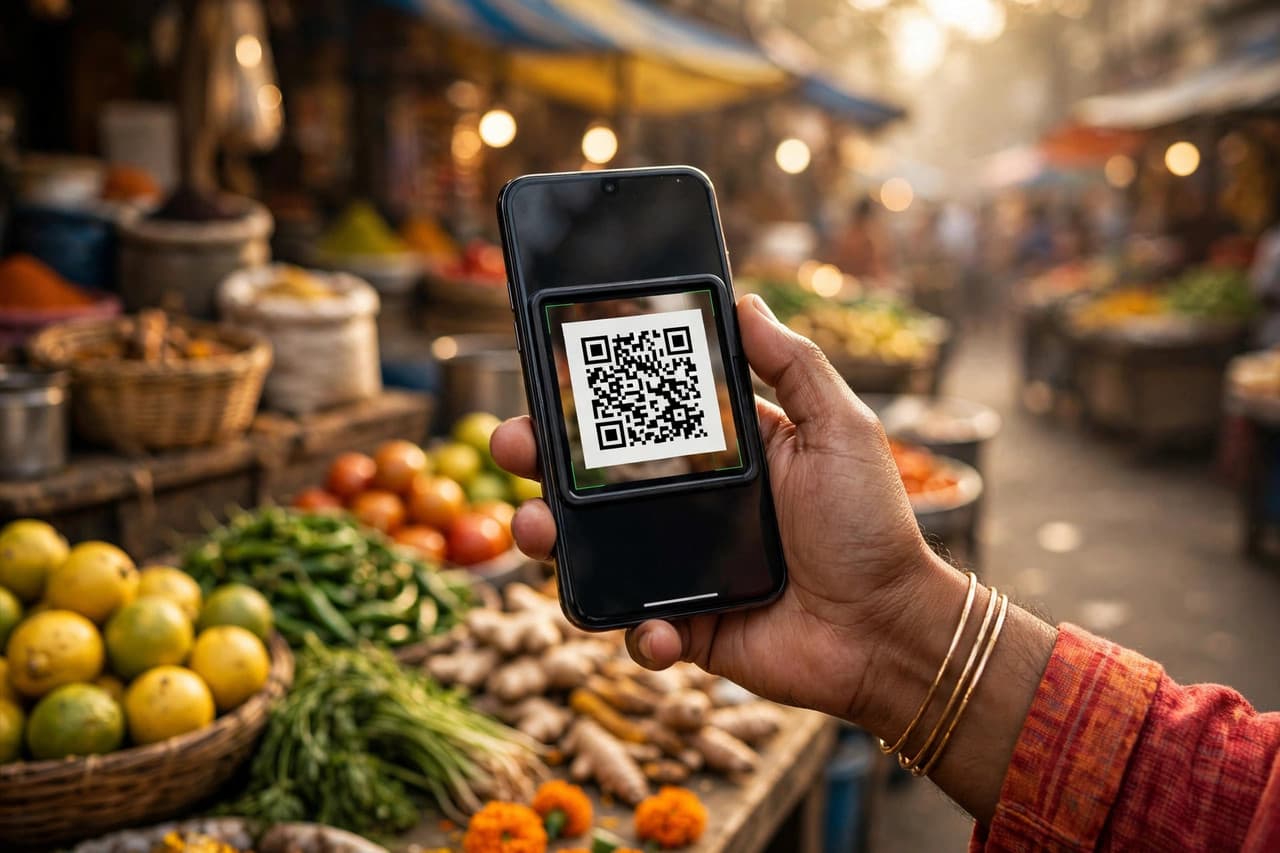
Your bank app may soon carry a second kind of money. Mint reported on 14 November 2026 that the Reserve Bank of India has allowed banks to fold digital-rupee (e₹) wallets into their main mobile banking apps — so you may not need a separate app to use RBI's digital cash. One caution before the excitement: the report rests on two unnamed people aware of the development, and the RBI has not commented. Treat it as reported, not announced.
Quick Answer: The digital rupee (e₹) is RBI-issued digital cash — legal tender like a ₹100 note, stored in a wallet on your phone. Mint reported on 14 November 2026 that the RBI has allowed banks to put e₹ wallets inside their regular banking apps. It pays no interest and is not the same as UPI.
What happened today — and what is actually confirmed
Until now, banks offered e₹ through separate apps. According to Mint's report, the RBI has now approved integrating the wallet into banks' main apps, because a separate download was holding back use. One banker told Mint: "The main app has a lot of visibility and therefore it would automatically translate into more usage of CBDC." What is confirmed: 19 banks offer e₹ wallets, including SBI, ICICI, HDFC, Axis, Kotak, Union Bank and Bank of Baroda (RBI data, cited by Mint). The retail pilot began in December 2022. In August 2026, RBI Deputy Governor Rohit Jain said that since the currency was being used for actual transactions, it could no longer be described as a pilot. Non-bank apps are also allowed in — CRED and MobiKwik launched e₹ wallets in 2025. What is NOT confirmed: no RBI circular has been quoted, and an email from Mint to the RBI went unanswered. So if your bank app does not show an e₹ wallet yet, nothing is wrong — the rollout, if it happens as reported, will reach banks at different speeds.What e₹ actually is
The e₹ is India's central bank digital currency (CBDC): the rupee in digital form, issued directly by the RBI. Three facts from the RBI's own e₹ FAQs (updated 1 October 2026) settle most confusion: - It is legal tender, at par with physical currency — ₹1 of e₹ equals ₹1 of cash. - It is a liability of the RBI, not of your bank. Money in your savings account is a bank's liability; money in your e₹ wallet is the central bank's, like a banknote in your pocket. - It pays no interest, and the wallet carries no minimum balance or fees. You can load, redeem and transfer 24×7. In short: e₹ is cash that lives on your phone instead of in your wallet.e₹ vs UPI vs cash — what actually changes for you
Here is the comparison, scored on what matters to you (weights as of 14 November 2026): - What it is (30%): e₹ is the money itself — RBI liability, legal tender. UPI is a rail that moves money between bank accounts. Cash is physical RBI liability. - Where it lives (25%): e₹ in a wallet, soon possibly inside your bank app (as reported); UPI inside any payments app; cash in your pocket. - Interest (20%): e₹ pays 0%. A bank balance you pay with through UPI keeps earning savings interest (typically around 2.7–3%) until you spend it. Cash pays 0%. - Failure mode (15%): e₹ works 24×7 but needs your bank's app; UPI needs bank servers and the internet; cash needs no network at all. - Privacy (10%): e₹ is token-based, like cash, but digital; UPI leaves a bank trail. The rule to take away: use e₹ when you want RBI-backed digital cash. Keep UPI as your daily default until in-app wallets are actually live at your bank.The ₹1,000 test — try it with real numbers
Say you load ₹1,000 from your savings account into your e₹ wallet, then pay a ₹250 grocery bill by scanning the shop's UPI QR code from the wallet (possible since the RBI's 2023 interoperability decision). The ₹250 leaves as e₹ tokens. Your bank balance fell by ₹1,000 at load time, not at payment time — the money moved from bank liability to RBI liability the moment you loaded it. The ₹750 left in the wallet earns no interest. The same ₹750 sitting in your savings account would earn roughly ₹20–22 a year at typical savings rates. Small money, but it is the reason e₹ is a spending wallet, not a savings wallet. (Illustrative example; savings rates vary by bank.)Why it hasn't taken off — the honest numbers
Here is the number the hype skips. Retail e₹ in circulation stood at ₹771.66 crore in FY26, down from ₹1,016.5 crore the previous financial year — a fall of 24.1% (RBI data, via Mint). Against total banknotes issued of ₹41.2 lakh crore in the same period, e₹ is about 0.019% of the cash in the system. That is tiny by any measure. Experts quoted by Mint cautioned that putting the wallet inside banking apps "would not necessarily translate into a significant increase in users". PwC India's Mihir Gandhi put it plainly: for consumers, it will only make sense "if there is more value than using UPI". So the story is not "UPI is finished". It is that the RBI is removing one friction — the separate download — and betting that easier discovery gets people to try digital cash at least once.Should you bother?
Yes, for one experiment, no for a switch. If your bank is among the 19 offering e₹ wallets, load ₹500, pay one shopkeeper by scanning a UPI QR code, and redeem the rest back to your account. You will learn in five minutes whether it feels any different from UPI — for most people, it will not, except that the money is RBI liability and earns nothing while it sits there. Do not confuse e₹ with a Paytm wallet or any other prepaid wallet: those hold your money with a private company under a licence; e₹ is the rupee itself, issued by the central bank. (See our 13 November guide to Paytm wallets for the difference.)What is the digital rupee (e₹)?
Is e₹ the same as UPI?
Do I need a separate app for e₹?
Does e₹ earn interest?
Ready to start?
Check whether your bank offers an e₹ wallet and load ₹500 to try one UPI-QR payment this week. Follow @myfwindia on Instagram for the daily checklist version of this guide. Get the myfw app on Google Play — 22+ calculators in your pocket.
Learn MoreEducational content only — not financial advice. Consult a SEBI-registered investment adviser for personal guidance; investments are subject to market risk.
Sources: Mint (via TradingView), "RBI said to allow e-rupee wallets within banking apps to boost adoption", 14 November 2026; Reserve Bank of India, Digital Rupee (e₹) FAQs, updated 1 October 2026.