


Market News
Rupee Falls to 96.78 Despite RBI Hike: What It Means for You
Rupee fell to 96.78/$ on Oct 7, 2026, despite RBI's rate hike to 5.50%. Why the hike didn't help the currency, what it means for you.
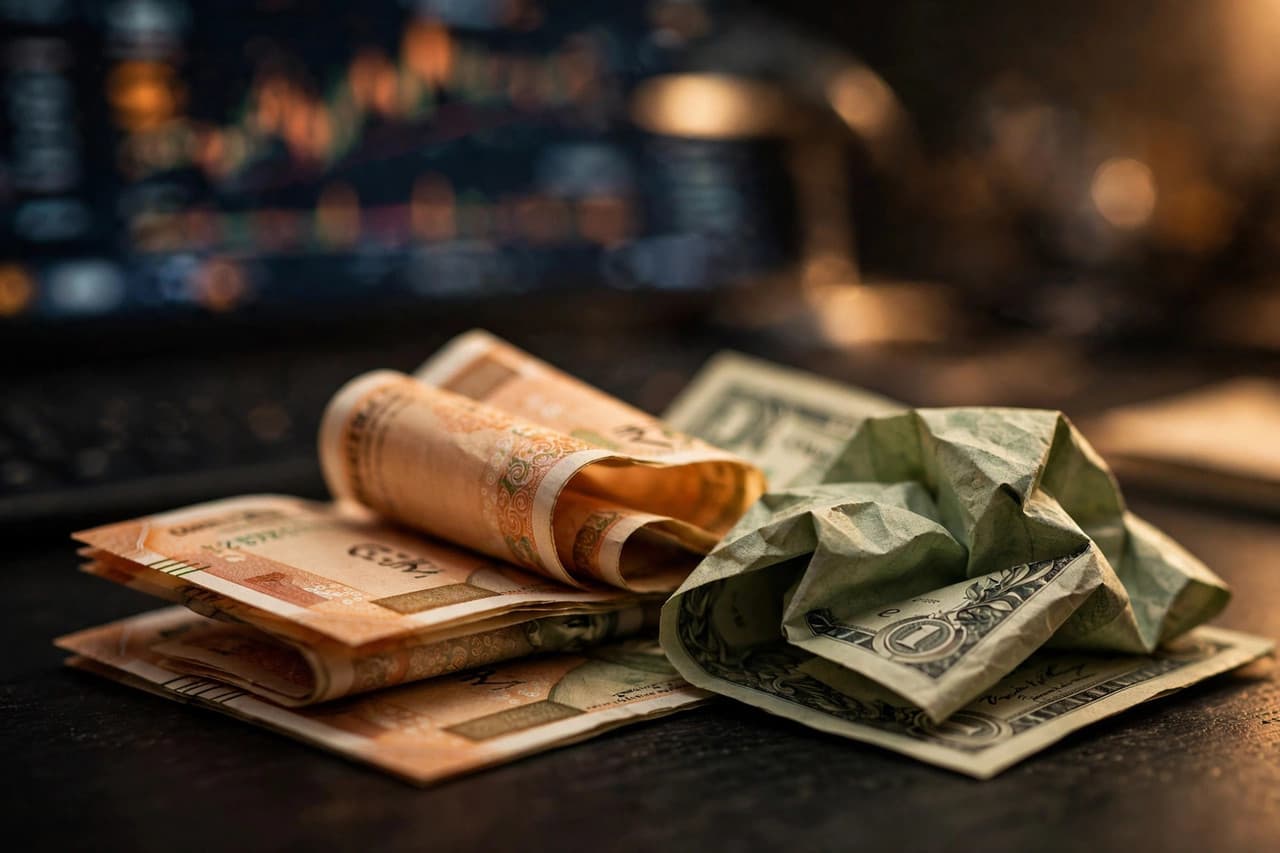
QUICK ANSWER: On October 7, 2026, the rupee fell to 96.78 per dollar — down 43 paise — even as the RBI raised the repo rate to 5.50%, a move that normally strengthens a currency. Markets had already priced in the hike, while high oil prices and a strong dollar kept pressure on. This guide explains why, in plain language, and what it costs you.
On Wednesday morning, the RBI did what textbooks say strengthens a currency: it raised interest rates by 25 basis points, to 5.50%, for the first time since February 2023. And the rupee fell anyway — closing at 96.78 per dollar (provisional), down 43 paise from Tuesday's 96.35. If that sounds backwards, you're not wrong to be confused. The usual logic — higher rates attract foreign money, which should lift the rupee — is real. But it's only one force among several. On October 7, the other forces won. Here's what actually moved the currency, explained simply.
What happened: the rupee's October 7 journey
Morning (pre-policy): The rupee opened around 96.4 and traded in a 96.34–96.84 range through the session (Hindu BusinessLine). Right after the hike: The 10 AM verdict brought no relief — the currency stayed under pressure through the day. Close: The rupee ended at 96.78 (provisional), down 43 paise — its second-weakest closing level on record and a five-month low (Hindu BusinessLine; NDTV Profit). Meanwhile the forward market was shouting its own story: the implied 1-year dollar-rupee forward premium jumped 20 basis points to 3.66%, its highest in six months, as traders positioned for more RBI dollar-selling operations (Reuters).Wait — shouldn't a rate hike strengthen the rupee?
Usually, yes. The textbook chain is: higher interest rates → better returns on Indian bonds → foreign investors bring dollars to buy them → more demand for rupees → rupee strengthens. That logic is sound — and it's exactly why the rupee did NOT strengthen today that makes the story interesting. Three things broke the chain on October 7.Reason 1: The hike was already priced in
Markets had spent weeks expecting exactly this. Polls of economists overwhelmingly predicted a 25-basis-point hike, and traders had already bought rupees and sold dollars on that expectation long before 10 AM on Wednesday. This is the "buy the rumour, sell the news" pattern you see after most big, widely-forecast decisions: the actual announcement carries no new information, so prices adjust to what comes next, not to the event itself. The RBI's hike was priced in — and priced-in moves rarely strengthen a currency on the day. (CNBC TV18's coverage noted the decision was "broadly in line with market expectations.")Reason 2: The dollar was strong and oil was surging
Currencies don't move in isolation — the rupee fell against the dollar, and the dollar was having a good day globally. Two forces were pushing: Brent crude jumped to about $102 a barrel (+1.41%), amid reports of Houthi attacks on Saudi Arabia (BusinessLine; Times Now). India imports the vast majority of its crude oil, so every dollar added to the oil price widens India's import bill and pressures the rupee. When oil rallies on geopolitical news, the rupee almost always feels it. August CPI inflation had come in at 4.82% (up from 4.45% in July) — above the RBI's comfort zone for a third month (CNBC TV18). Persistent inflation plus expensive oil is exactly the combination that weakens an emerging-market currency, rate hike or not.Reason 3: RBI gave currency traders no new liquidity surprise
Here's the part most headlines skipped. The RBI announced no new liquidity-withdrawal measure — no CRR hike, no fresh absorption tool — and Governor Sanjay Malhotra said only that the central bank would use an "appropriate" mix of liquidity tools (Reuters). Currency traders read that as: the RBI will keep managing the liquidity overhang the way it has been — through sell/buy FX swaps (selling dollars now, buying them back later), which drain rupee liquidity created by its dollar-mobilisation schemes. The 1-year forward premium — the gap between today's exchange rate and the rate locked in for a year ahead — soared 20 bps to 3.66%, a six-month high (Reuters). A rising premium means markets expect further rupee weakness or heavy demand to lock in dollars early — and the expectation of more RBI swaps keeps pressure on the rupee today.What 96.78 actually costs you: the rupee math
Headlines about currency moves feel abstract. They stop being abstract the moment you pay for something priced in dollars. Here's what a 43-paise slide in a single day means in rupees, using October 7's move from 96.35 to 96.78. (Illustrative arithmetic, not advice.) Overseas education: A $30,000 annual tuition fee costs ₹29,03,400 at 96.78 versus ₹28,90,500 at 96.35 — a difference of about ₹12,900 for the same invoice, in one day's move. International travel: A $2,000 holiday budget now needs ₹1,93,560 versus ₹1,92,700 — roughly ₹860 more. Imported goods and fuel: Importers pay in dollars and pass costs through. Oil at $102 plus a weaker rupee is a double hit that feeds into fuel prices and inflation — which is why inflation worries and the rupee weaken each other. The flip side — NRIs win: If you receive $5,000 a month from family abroad, you now get ₹4,83,900 instead of ₹4,81,750 — about ₹2,150 more per remittance. A weaker rupee is a pay rise for remittance receivers and a tax on dollar spenders.Winners and losers of a weak rupee
Winners: Exporters (IT services, pharma, textiles earn in dollars and convert at more rupees), NRIs sending money home, and anyone holding dollar-denominated assets. Losers: Importers, students and parents paying foreign fees, international travellers, and every household to the extent a weak rupee plus $102 oil feeds into fuel prices and inflation. The mixed middle: Equity investors saw the Sensex fall 429 points to 72,638.70 and the Nifty drop 173 points to 22,603.05 — but rate-sensitive PSU banks rose about 1%, and small-caps gained 0.30% (ET Now; IANS). A hike day punishes borrowers and rewards lenders; the market reflected exactly that.5 practical moves for the next three months
Educational framing, not personal advice — but here's how to think about it: 1. Don't panic-convert. A 43-paise daily move is noise for anyone without an imminent dollar payment. Reacting to one day's headline is how people lock in the worst rates. 2. If you have a known future dollar expense (fees, travel), stagger it. Splitting a large conversion across weeks smooths out exactly this kind of volatility — rupee-cost averaging applied to forex. 3. Compare the all-in cost before a trip. Forex cards, cash, and international debit cards each add their own markup (often 1–3.5%) on top of the interbank rate. The headline rate is never what you pay. 4. NRIs: time discretionary remittances loosely, don't stress. If a transfer can wait a week, waiting through a volatile patch is reasonable — but nobody can time the bottom. 5. Watch oil, not just the RBI. The next big rupee driver is as likely to be a Brent headline as a policy statement. If crude stays near $102, expect continued pressure regardless of December's decision.What to watch next
RBI's swap activity and weekly forex-reserve data: a still-climbing forward premium confirms the central bank is leaning harder into dollar sales. December policy: the stance is now "calibrated tightening" and rate cuts are off the table near-term. The market will react to the guidance, not just the move — as October 7 proved. The lesson of October 7 is a useful one for every investor: a "good" policy decision can still produce a "bad" market outcome when expectations, global forces, and liquidity plumbing all point the other way. Understand the forces, size the impact on your own wallet, and act on your timeline — not the headline's.SOURCES: Rupee closed at 96.78/$ (provisional), down 43 paise from Tuesday's 96.35; traded in a 96.34–96.84 range; second-weakest close on record, a five-month low — Hindu BusinessLine; NDTV Profit, Oct 7, 2026. Aug CPI 4.82% vs 4.45% July — CNBC TV18, Oct 7, 2026. Brent ~$101 on Houthi attacks on Saudi Arabia — Times Now, Oct 7, 2026. 1-year dollar/rupee forward premium +20 bps to 3.66%, 6-month high; no new liquidity-withdrawal measure; traders bracing for more sell/buy FX swaps — Reuters, Oct 7, 2026. 10-year bond yield highest since December 2023 — Business Times, Oct 7, 2026. Sensex 72,638.70 (-429.11); Nifty 22,603.05 (-173.05) — Hindu BusinessLine, Oct 7, 2026. Nifty PSU Bank +1%; SmallCap +0.30%, MidCap -0.63% — ET Now / IANS, Oct 7, 2026.
This article is for educational purposes only and is not financial advice. Please consult a SEBI-registered investment adviser for personalized guidance. Investments are subject to market risk.
Frequently asked questions
Will the rupee hit 100 per dollar?
Does a rate hike always strengthen the currency?
Should I buy dollars now because the rupee might fall further?
Does a weak rupee affect my mutual fund SIPs?
I'm an NRI. Is a weak rupee good for me?
Your next move
Open your notes app and list every dollar-linked expense you expect in the next 6 months — fees, travel, subscriptions, EMIs on foreign loans. Next to each, write whether the timing is flexible. If it is, set a calendar reminder to check the rate weekly instead of converting in a panic on a headline day like October 7. That one habit beats any forecast.
Learn MoreDiscussion
KEEP EXPLORING
More in Market News Your next good read.
Market News
SEBI U-Turn on Closing Auction: What It Means for You
6 min read
Market NewsAfter 8 Weeks of Losses — the Longest in 25 Years — Markets Snap Back: 5 Reasons Why, and 3 Things to Watch This Week
7 min read
Market NewsSEBI's Secret Is Out Today: What Your Broker Must Now Show You Every Time You Log In
8 min read
Market NewsRBI's October 5–7 Meeting: First Rate Hike Since 2023 Expected — What It Means for Your Money Before Tuesday
10 min read