


Market News
Rupee Hits 95.80 Against the Dollar: Why It's Falling, How RBI Is Fighting Back, and What It Means for Your Money
The rupee touched 95.80/$ as RBI defends the 96 line with dollar sales and swaps. What it means for petrol, travel, loans, and investments — explained simply.
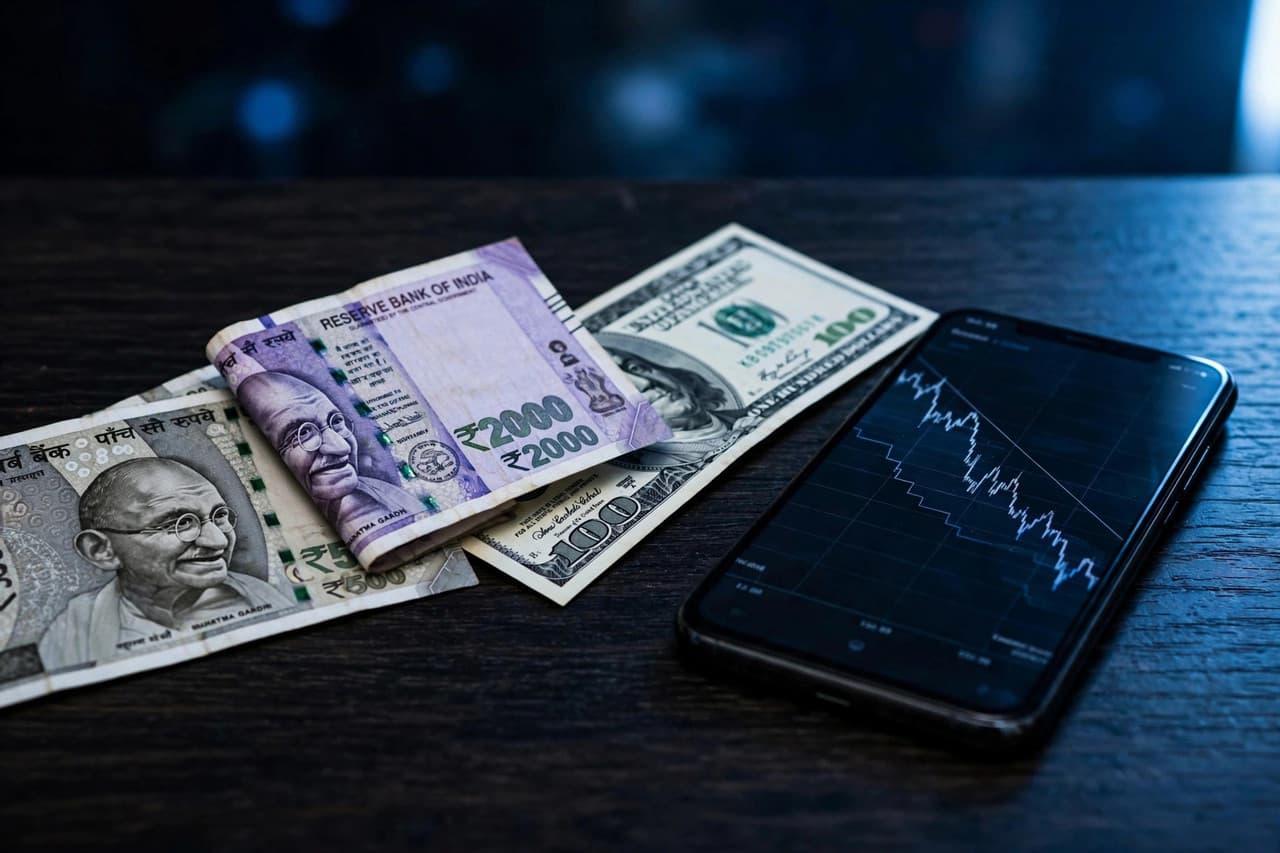
The Indian rupee closed at 95.81 against the US dollar on Friday, 25 September 2026 — perilously close to the 96 mark that the Reserve Bank of India is now treating as a red line. Traders reported that the central bank sold dollars before the market even opened that morning to stop the slide.
So why is the rupee falling, what exactly is the RBI doing about it, and — most importantly — what does it mean for your petrol bill, your foreign trip, and your investments? Here's the full picture, explained simply.
How Weak Is the Rupee Right Now?
The rupee rose to 95.88 on the interbank order-matching system in early Friday deals, paring its decline from an early low of 95.97, before closing at 95.81 — up slightly from the previous session's 95.9550, according to market reports. That recovery didn't happen by accident: four currency traders told Reuters the RBI likely intervened before the local spot market opened, choosing a low-liquidity moment when even modest dollar sales have a magnified impact. Context matters. In early September the rupee touched 94.2850 — its strongest in over two months — after the RBI's defensive operations. Since then, a combination of global shocks has pushed it back toward 96. In the week before Friday's session alone, traders estimate the central bank sold between $8 billion and $15 billion to support the currency. The RBI's record-high foreign exchange reserves — around $781 billion, bolstered by a diaspora deposit scheme that has attracted roughly $133 billion — give it deep pockets for this defence. One trader summed up the market's reading: the RBI "is defending 96 quite sternly, making it a line in the sand for the moment."Why the Rupee Is Falling: 4 Drivers
1. Crude oil is expensive again
India imports the vast majority of its crude oil, and Brent crude has been hovering between $99 and $104 a barrel as the Middle East conflict escalates — Iran's Revolutionary Guards reportedly attacked vessels in the Gulf earlier this month, and US-Iran diplomacy remains unresolved. Every $1 rise in crude roughly widens India's import bill, increasing dollar demand and pressuring the rupee.2. Foreign investors keep selling Indian stocks
Overseas investors sold $1.81 billion of Indian shares in September and a staggering $25.87 billion so far this year, according to market data. When foreign investors pull money out, they sell rupees and buy dollars — a direct drag on the currency.3. The US dollar is strong
The US Federal Reserve has been hiking rates, pushing US bond yields higher and making the dollar more attractive globally. The Bank of Japan also raised rates last week, with markets pricing a 56% chance of another US hike in October. Capital flows toward the world's safest currency when global risk appetite falls.4. The RBI is hinting rates could rise
At its August 3–5 policy review, the RBI held the repo rate at 5.25% with a "neutral" stance, nudging its FY27 growth forecast up to 6.7% (from 6.6%) and its inflation forecast down to 5% (from 5.1%). But the tone was cautious: Governor Sanjay Malhotra said the bank was "neither dovish nor hawkish," and Deputy Governor Poonam Gupta noted a case for a rate hike could emerge as headline inflation approaches its projected October–December peak. Markets now have the next MPC meeting (October 5–7) firmly on their radar — and rate-hike bets are one more reason traders are cautious on the rupee.How the RBI Is Fighting Back: Explained Simply
The RBI rarely announces its currency trades in real time, but traders can see its fingerprints. Here's the playbook, in plain language:Dollar sales through state-run banks.
When the RBI wants to prop up the rupee, it sells dollars from its reserves and buys rupees. To keep its hand hidden, it often acts through public-sector banks. That was Friday's move.
Dollar-rupee swaps.
This is the clever part. In a "sell/buy swap," the RBI sells dollars and absorbs rupees now, and agrees to reverse the trade later. It soaks up rupee liquidity without permanently depleting headline reserves. Traders estimate the RBI has been running January 2027 sell/buy swaps worth roughly $1 billion a day over the past 10 trading sessions.
Draining banking-system cash.
Combined with open-market sales of government bonds, the swaps have shrunk the banking system's liquidity surplus by about 55% from its recent record peak of ₹11.16 trillion. Less spare cash means short-term borrowing costs rise — which makes it much more expensive for currency speculators to fund bets against the rupee. The one-year dollar-rupee forward implied yield has climbed to 3.50% as a result.
Pulling in foreign capital.
Rather than only fighting outflows, the RBI and the government have opened the tap on inflows: the government exempted foreign institutional investors from capital gains tax on interest from government securities, and the RBI broadened the universe of sovereign bonds available under its unrestricted foreign investment route. The aim: more dollar inflows to fund the current account gap.
Interestingly, the RBI's own leadership has struck a calmer note. RBI official Poonam Gupta has said there is a "fair case" for rupee appreciation from here, citing a narrowing current account deficit and anticipated capital inflows through the fiscal year. Goldman Sachs expects USD/INR to stay within the 95–97 range, noting the RBI "has plenty of tools to cap the upside" and hasn't even begun hiking policy rates yet. The repo rate remains at 5.25% with a "neutral" stance.
What a Weak Rupee Means for Your Money
Petrol and diesel get costlier
A weaker rupee makes every barrel of imported crude more expensive in rupee terms — even if the global price doesn't move. Fuel retailers typically pass part of this on, so expect pump prices and freight costs (and therefore groceries) to face upward pressure.Foreign travel and education get pricier
Studying abroad, a holiday in Europe, or paying for an international subscription — everything billed in dollars costs more rupees. Students and parents budgeting for overseas education fees should factor in a weaker rupee, not just the headline fee.Electronics and imports cost more
Phones, laptops, and imported components are priced in dollars globally. Currency weakness often shows up as higher MRPs or smaller discounts on imported goods over the following months.Your foreign investments get a cushion — sort of
If you hold US stocks or international mutual funds, a falling rupee actually boosts your returns in rupee terms (the same dollar asset is worth more rupees). But that's a currency side-effect, not a reason to invest.Exporters and IT companies breathe easier
A weaker rupee is good news for exporters, IT services firms, and anyone earning in dollars — their dollar revenues translate into more rupees. This is one reason markets don't panic about mild depreciation.Loans and EMIs: limited direct impact — for now
The rupee itself doesn't set your home loan rate. But if currency weakness feeds inflation (through fuel and imports), the RBI could eventually raise rates. Traders are already raising bets on an RBI rate hike later this year, even though the central bank held the repo rate at 5.25%.Should You Do Anything?
Currency headlines feel dramatic, but for most households the right response is calm and practical: • Don't panic-convert or hoard dollars. Timing currencies is speculation, not planning. • If you have dollar expenses coming (tuition fees, a booked trip), consider spreading your forex purchases rather than buying everything at once — averaging works for currency too. • Review your fuel and travel budgets if you haven't since crude started climbing. • Emergency funds matter more when inflation rises. If you don't have 3–6 months of expenses set aside, a volatile period is a good reminder to start.Frequently Asked Questions
Why is the Indian rupee falling against the dollar?
What is the RBI doing to support the rupee?
Will the rupee cross 96 per dollar?
Does a falling rupee increase my loan EMI?
Is a weak rupee good or bad for India?
How much foreign exchange reserves does India have?
Action Prompt
Your money move this week: Check one dollar-linked expense in your life — an upcoming foreign trip, a child's overseas application, or an international subscription — and price it at 96 rupees to the dollar. If the number surprises you, set a calendar reminder to review it monthly rather than reacting to daily headlines. Currency noise rewards the patient and punishes the panicked.
Learn MoreThis article is for educational purposes only and is not financial advice. Please consult a SEBI-registered investment adviser for personalized guidance. Investments are subject to market risk.
Sources: Reuters (25 Sep 2026), The Hindu BusinessLine market highlights (25 Sep 2026), tradingeconomics.com currency reports, HDFC Sky market desk, Finimize, Flash Finance, Forbes India / The Hindu BusinessLine MPC coverage (August 2026 policy).
Discussion
KEEP EXPLORING
More in Market News Your next good read.
Market News
After 8 Weeks of Losses — the Longest in 25 Years — Markets Snap Back: 5 Reasons Why, and 3 Things to Watch This Week
7 min read
Market NewsSEBI's Secret Is Out Today: What Your Broker Must Now Show You Every Time You Log In
8 min read
Market NewsRBI's October 5–7 Meeting: First Rate Hike Since 2023 Expected — What It Means for Your Money Before Tuesday
10 min read
Market NewsSensex −571, Nifty −0.88%: Bajaj Auto Crashes ~8% on September Sales Miss — Markets Shut Till Monday
6 min read