


Quick Answer: Credit Line on UPI is a pre-approved credit limit from your bank that lives inside your UPI app — no physical card needed. You scan any UPI QR and pay from the credit line, then repay in full within the interest-free window (up to ~45 days on some products) or convert the balance into EMIs. It is reported to credit bureaus like any other loan.
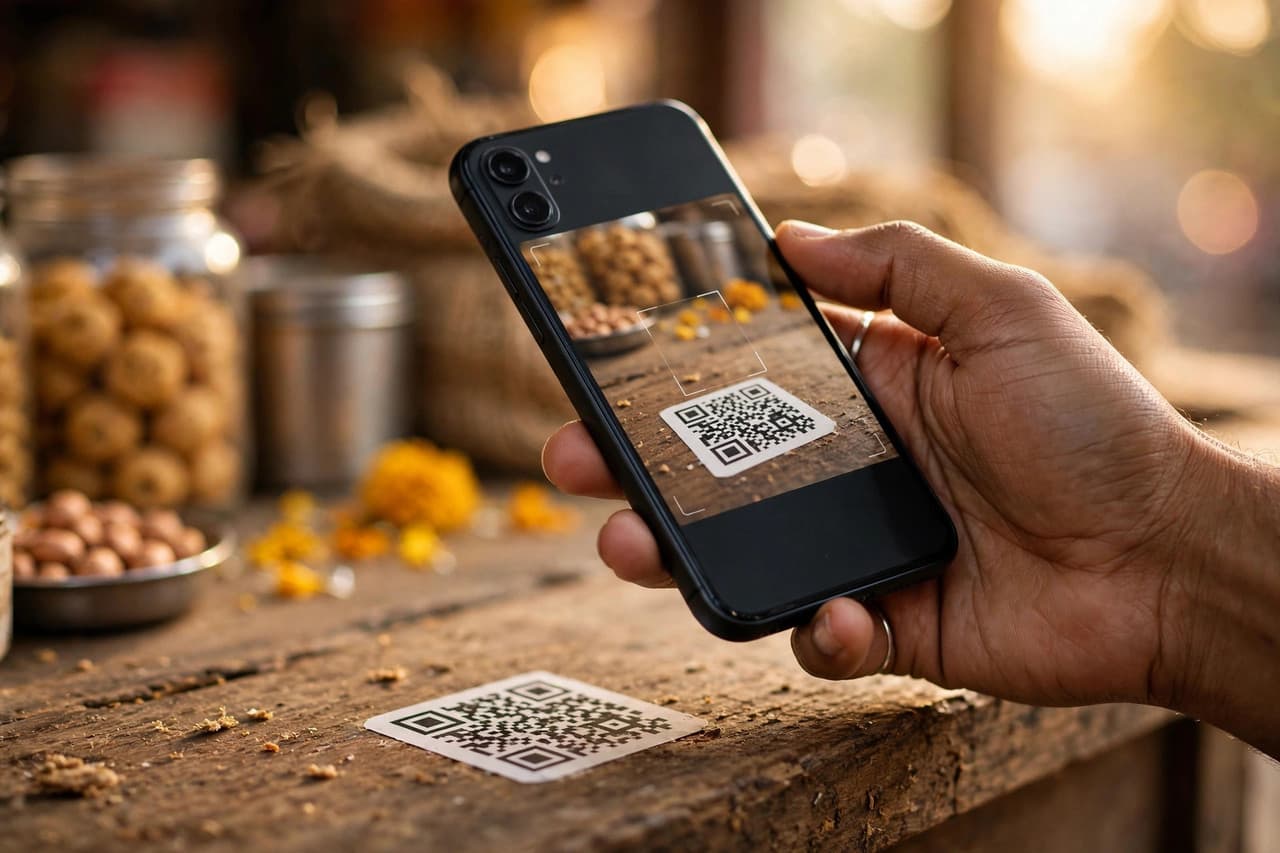
Scan a QR, pick your bank account, enter your UPI PIN, done. Now imagine the same flow, except the money comes from a credit line your bank pre-approved — sitting inside the same UPI app. No card application, no plastic, no waiting. That is Credit Line on UPI, and in 2026 it has moved from NPCI concept to a product you can actually use.
## What it actually is — and what it is not
A Credit Line on UPI (CLOU) is a pre-sanctioned credit facility extended by a bank (or an RBI-regulated lending partner) that you access through any UPI app. Think of it as an overdraft that speaks UPI: the bank sets a limit based on your credit profile, and every QR you scan can draw from that limit instead of your account balance. What it is not: it is not a credit card. A RuPay credit card linked to UPI is still a card product — it has a card number, a billing cycle, and a revolving credit structure. A credit line has no card at all; it is purely a limit attached to your UPI handle. It is also not "buy now, pay later" in the fintech-app sense — it is bank-issued credit on regulated rails, reported to credit bureaus, with formal repayment obligations.
## How it works, step by step
1. Your bank pre-sanctions a limit. Based on your credit history, income, and existing relationship, the bank offers you a credit line — for example, up to ₹60,000 a month on products like BharatPe Flex, launched around September 2026. 2. You link it in your UPI app. Instead of selecting your savings account at checkout, you select the credit line as the payment source. 3. You scan and pay as usual. The merchant gets paid instantly over UPI rails. Below ₹2,000, the merchant pays zero MDR on these transactions; above ₹2,000, NPCI caps the MDR at 1.10% — which is part of why small merchants accept it happily. 4. You repay. Settle the full amount within the interest-free window (up to 45 days on some products) and you pay no interest. Or convert the outstanding balance into EMIs of 3–12 months and pay it down with interest.
## Credit line on UPI vs RuPay credit card: what is actually different
- Form factor: Credit line = no card, lives in the UPI app. RuPay credit card = a real card that also works on UPI. - Interest-free period: Credit lines typically offer up to ~45 days (product-dependent). Credit cards typically offer up to ~48–50 days from the start of the billing cycle. - Where it works: Both work on any UPI QR. The credit card additionally works online and at POS terminals as a card. - Credit reporting: Both are reported to bureaus. A missed payment on either hurts your CIBIL score the same way. - Rewards: Cards have established rewards programmes. Credit-line products are adding fixed rewards on daily spends, but the ecosystem is younger. Neither is universally "better" — they are different instruments for different habits. The credit line wins on simplicity (no card to manage); the card wins on acceptance breadth and mature rewards.
## How big is this already? The numbers
Credit on UPI rails is no longer experimental: RuPay credit-on-UPI hit 750 million transactions worth ₹63,826 crore at an average ticket of just ₹851 — everyday spending, not big-ticket borrowing. QR deployment grew 91.5% year-on-year to 657.9 million codes, fastest in tier-2 and tier-3 cities. A Pine Labs/McKinsey analysis suggests credit-linked payment products could generate as much revenue as home and auto loans combined by 2030, with 330 million credit-ready consumers — 150–200 million underserved by formal credit. One founder called it "an entirely new credit pie." Whether the projection holds is unknowable; the direction is not.
## What it costs: the honest math
- Interest-free window: repay in full within the window (up to ~45 days on products like BharatPe Flex) and you pay zero interest. Miss it, and interest accrues on the outstanding balance. - Interest rate: varies by bank and your profile — it is typically in the same zone as credit-card or personal-loan rates. There is no single published number; check your sanction letter or the product's terms before you spend a rupee. - Late fees and GST: late-payment charges apply, and GST is levied on fees and interest components as per tax rules. - EMI conversion: converting to EMIs spreads the cost but adds interest over the tenure — the longer the tenure, the more you pay in total. Here is a worked illustration of EMI conversion. Say you spend ₹24,000 from a ₹60,000 credit line and convert it to a 12-month EMI at an assumed 18% per annum (illustrative — your bank's actual rate will differ): monthly rate 1.5%; EMI ≈ ₹2,200; total repaid over 12 months ≈ ₹26,406; total interest ≈ ₹2,406.
## The risks nobody advertises
- It is real debt, reported to bureaus. A credit line is not "UPI with extra steps" — it is a loan. Utilisation and repayment behaviour flow to CIBIL and other bureaus. Maxing out the line hurts your credit utilisation ratio; missing a payment hurts your score. - Frictionless credit is the risk. The entire design — no card, no application per transaction, one PIN — removes the psychological pause that used to sit between "want" and "borrow." The ₹851 average ticket shows people use it for daily spending, which is exactly where small leaks sink budgets. - The free window is a cliff, not a slope. Pay in full by the due date: zero interest. Miss it by a day: interest on the balance, often from the transaction date. Set up autopay or calendar reminders. - Stacking risk. A credit line plus a credit card plus BNPL can quietly add up to monthly obligations your salary cannot cover. Lenders see all of it; so should you.
## Who should consider it — and who should pause
Consider it if you have a stable income, pay balances in full most months, and want a clean, card-free way to handle lumpy expenses (a medical bill, a festival-season purchase) without touching your emergency fund. Pause if you already revolve balances on a credit card, if your total EMIs exceed ~40% of your monthly income, or if "interest-free window" sounds like free money rather than a deadline. None of this is personal advice — it is a framework; a SEBI-registered adviser can assess your specific situation.
## The bottom line
Credit Line on UPI is the most significant change to how Indians borrow since UPI itself: bank credit, no card, inside the app you already use 10 times a day. Used with discipline — full repayment inside the free window, EMIs only for planned spends — it is a genuinely useful tool. Used casually, it is the easiest debt you will ever take on, which is precisely why it demands the most respect.
Frequently Asked Questions
What is Credit Line on UPI?
How is it different from a RuPay credit card on UPI?
Is there really zero MDR below ₹2,000?
Does a credit line on UPI affect my CIBIL score?
What happens if I don't repay within the free window?
Can I convert my credit-line spends into EMIs?
Before your first scan
If your bank has offered you a credit line on UPI: before your first scan, find three numbers in the terms — the exact interest-free window in days, the interest rate after it, and the late fee. Save the due date as a recurring phone reminder. Then use the EMI calculator above to price any EMI conversion before you tap "convert."
Learn MoreSources: CardExpress research, ~Sep 2026 (NPCI-sourced) — 750M txns, ₹63,826 cr, ₹851 avg ticket, zero MDR <₹2,000, 1.10% cap; Asianet Newsable, Sep 10, 2026 — BharatPe Flex launch; Pine Labs/McKinsey via medial.app/Entrackr — 2030 revenue projection, 330M credit-ready; BW Businessworld — QR +91.5% YoY.
Disclaimer: This article is for educational purposes only and is not financial advice. Please consult a SEBI-registered investment adviser for personalized guidance. Investments are subject to market risk.