


UPI & Digital Payments
UPI MDR From Oct 15: Will Shops Charge You Extra? Explained
From Oct 15, 2026, UPI merchant payments above ₹2,000 carry 0.4% MDR. P2P stays free, small merchants exempt. What actually changes at the counter — explained.
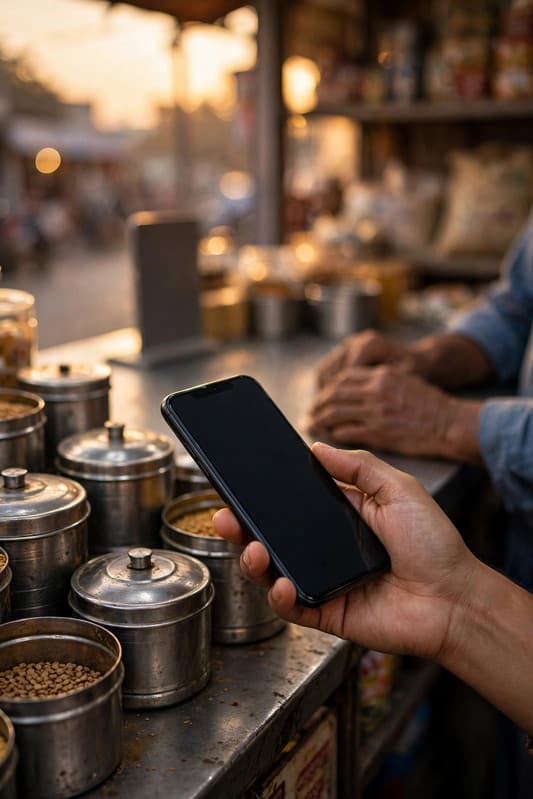
QUICK ANSWER: From October 15, 2026, person-to-merchant UPI payments above ₹2,000 carry a 0.4% UPI MDR (merchant discount rate), capped at ₹300 per transaction. Person-to-person transfers stay free, payments up to ₹2,000 stay free, and small merchants receiving up to ₹1 lakh a month stay at zero MDR. The Finance Minister says consumers will not be charged.
What actually changes on October 15
For a decade, UPI's biggest selling point after convenience has been a single word: free. From October 15, 2026, that word gets an asterisk — but a smaller one than the headlines suggest. The framework, built through a Payment and Settlement Systems Act amendment in August 2026, a Finance Ministry gazette notification on September 14 and an NPCI circular on September 15, works like this: - 0.4% MDR on person-to-merchant (P2M) UPI payments above ₹2,000 - Capped at ₹300 per transaction — the cap kicks in at ₹75,000 and above - Payments up to ₹2,000: free, exactly as today - Person-to-person (P2P) transfers: free, no change - Small merchants exempt: up to ₹1 lakh per month via QR stays at zero MDR - Essential sectors (railways, telecom, insurance, fuel, farm inputs): flat ₹5 MDR above ₹2,000 - Capital-market payments: 0.02%, capped at ₹300 - Revenue split: 40% customer's bank, 30% payment gateway, 20% UPI app, 10% sponsoring bank The government and NPCI say roughly 96% of merchant transactions fall in the free buckets and will be unaffected.Will the shop charge YOU extra? The honest answer
Finance Minister Nirmala Sitharaman stated on September 25 that the MDR is "not a tax, not a cess, not even a surcharge" and will not burden consumers. The MDR is paid by the merchant's side of the chain — deducted from what the merchant receives, the way card MDR has always worked. You pay ₹5,000; the merchant receives ₹5,000 minus ₹20. What to watch anyway: a LocalCircles survey reported in early October found only 14% of users would keep using UPI if merchants passed the charge on. If a merchant nudges you toward cash for a ₹3,000 bill or adds a "UPI extra", that is the merchant's choice — and the official position is that consumers are not to be charged. The scale: NPCI data shows UPI volume surged 27% to 145 billion transactions in H1 FY27, value up 20% to ₹177 lakh crore.Three scenarios: what happens at the counter
1. Groceries worth ₹800 paid by UPI: nothing changes — payments up to ₹2,000 are fully free. 2. A ₹5,000 dentist bill by UPI: a ₹20 MDR (0.4%) applies on the merchant's side. You should still be charged ₹5,000. 3. A kirana store doing ₹80,000 a month on its QR code: stays at zero MDR under the small-merchant exemption (up to ₹1 lakh/month).Why this is happening now
UPI's zero-MDR era was always subsidised while volumes scaled. With 145 billion transactions in six months, the subsidy math stopped adding up. The September framework is the compromise: keep UPI free for small everyday payments and small merchants, and let the large-merchant, high-value slice carry a cost — 0.4%, far below the 1–2% typical on credit cards.Note: This article explains a policy change for information purposes. Fee frameworks can be revised — check NPCI or your bank's latest circulars for updates.
This article is for educational purposes only and is not financial advice. Please consult a SEBI-registered investment adviser for personalized guidance. Investments are subject to market risk.
Frequently Asked Questions
Is UPI still free after October 15, 2026?
Will I be charged extra when I pay a shop by UPI?
What is the maximum MDR on one UPI payment?
Does the MDR apply to sending money to friends or family?
I am a small shop owner. Do I need to do anything?
Why introduce MDR when UPI was built to be free?
Keep this handy
Your daily UPI habit under ₹2,000 is untouched. But save this page — the first time a merchant mentions a "UPI charge" on a bill above ₹2,000 after October 15, you'll know the exact rule, the ₹300 cap, and the official line.
Learn MoreDiscussion
KEEP EXPLORING
More in UPI & Digital Payments