


UPI & Digital Payments
UPI MDR Deferred Till After Diwali: What It Means for Your Payments
NPCI has deferred UPI MDR on select merchant transactions till after Diwali (Nov 8). The Oct 15 rollout is off — here is what charges may still apply after.
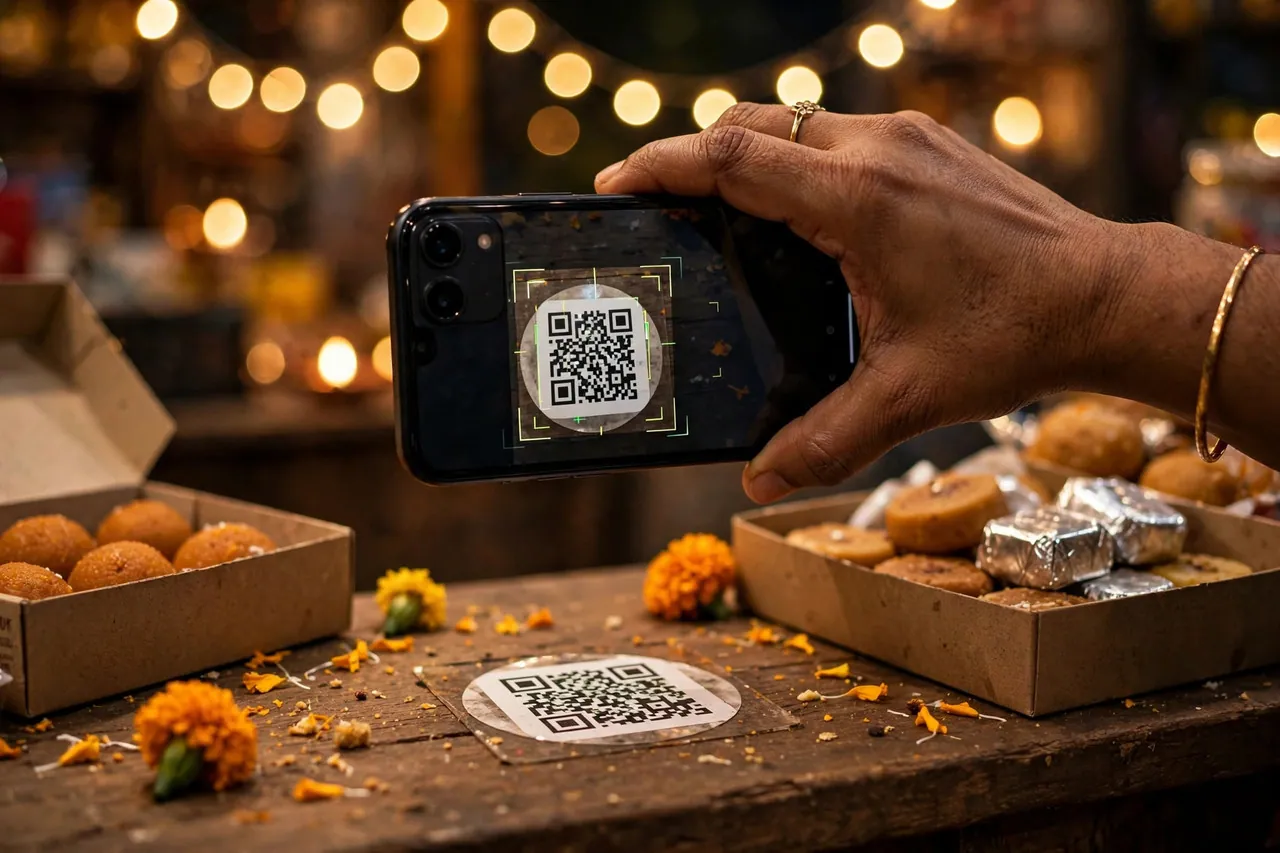
Quick Answer: NPCI's UPI and Services Steering Committee decided on 13 October 2026 to defer MDR on select person-to-merchant UPI transactions to immediately after Diwali (8 November), on a date to be notified separately. Your everyday UPI payments remain free; the proposed 0.4% framework now lands after the festive season, not on 15 October.
NEWS UPDATE: the October 15 deadline is off
On 13 October 2026, the UPI and Services Steering Committee decided that Merchant Discount Rate (MDR) on select person-to-merchant (P2M) UPI transactions would be implemented immediately post Diwali, on a date to be notified separately. The framework had been scheduled to take effect from 15 October 2026. That date is now off the table.
NPCI's statement was brief and explicit: keeping in mind the festive season, MDR on select P2M UPI transactions shall be implemented immediately post Diwali on a date to be notified separately. Diwali falls on Sunday, 8 November 2026 — but the exact implementation date after it has NOT been announced. Anything claiming a specific post-Diwali date right now is speculation.
This is a news update to our full explainer from 3 October, "UPI MDR From Oct 15: Will Shops Charge You Extra? Explained", which covered the complete framework in depth. Below is a compact recap of the framework, then what the deferral changes.
The framework in 150 words: a compact recap
- 0.4% MDR on select P2M UPI transactions above ₹2,000, capped at ₹300 for transactions of ₹75,000 and above.
- Flat ₹5 per transaction above ₹2,000 in essential, thin-margin sectors: railways, telecom, insurance, fuel, agricultural inputs, utilities and education.
- Person-to-person transfers stay completely free, whatever the amount.
- All merchant payments up to ₹2,000 stay free.
- Small merchants collecting under ₹1 lakh a month through existing UPI QR codes stay under zero-MDR.
- Reporting attributed to NPCI puts the affected slice at around 4% of merchant transactions, with over 95% of P2M transactions outside the framework; the government separately states around 96% of merchant UPI transactions remain unaffected.
- 0.02% for capital-market transactions.
- The charge is shared among banks, payment service providers and UPI app providers — and the government has clarified it is not a tax.
Why NPCI hit pause — the festive-season logic
The deferral lands in the middle of India's peak spending season. Digital payment volumes surge during Dhanteras and Diwali as households buy everything from jewellery to appliances, and the UPI and Services Steering Committee explicitly cited the festive season in its decision.
The pushback had been building for weeks. Trader bodies — including the Confederation of All India Traders (CAIT) and the Federation of Retail Traders Welfare Association (FRTWA) — wrote to the Finance Minister asking for a rethink, and fintech and payments companies had raised concerns about implementing charges right before the year's highest-volume sales window. A Moneycontrol report had earlier suggested NPCI was weighing a deferral as far out as January 2027; the eventual call landed on "immediately post Diwali".
Context matters here too. The RBI Governor had publicly said a small fee would not majorly impact UPI volumes, and the Finance Minister clarified on 25 September that the charge is "not a tax". The framework itself arrived through the NPCI circular of 15 September and the gazette notification S.O. 5067(E) of 14 September. The deferral changes none of that machinery — it only moves the start line.
What changes for you as a consumer: practically nothing, for now
- Your everyday UPI payments — chai, groceries, autos, peer transfers — remain completely free. Nothing in the deferral or the framework changes that.
- Payments up to ₹2,000 to any merchant remain outside the framework entirely.
- Even after implementation, MDR is a merchant-side fee — charged on the merchant's side of the ecosystem, not as an extra charge to you at checkout. The government's position is that UPI should remain free for customers at the till.
- The only realistic thing to watch: whether any merchant tries to discourage large UPI payments or nudges you toward other modes after the framework lands. That remains to be seen, and it is worth noticing rather than worrying about.
What changes for merchants: breathing room before the festive rush
For shopkeepers and payment companies, the deferral means two things: no checkout friction changes during the year's most important sales weeks, and more time to prepare technically and commercially for the framework. Small merchants (under ₹1 lakh a month via UPI QR) were already exempt and remain so — the deferral mostly helps mid-sized and larger merchants whose bigger-ticket P2M transactions fall in the affected slice.
What happens after Diwali: the honest answer is "we'll see"
NPCI will notify the implementation date separately. Until that notification lands, the framework's rates, thresholds and exemptions stand as announced in September — deferred, not scrapped.
Timeline: how we got here
- 14 September 2026: Gazette notification S.O. 5067(E) lays the groundwork.
- 15 September 2026: NPCI's circular details the MDR framework.
- 25 September 2026: Finance Minister clarifies the charge is "not a tax".
- 3 October 2026: Our full explainer (Post #67) goes live.
- 13 October 2026: UPI and Services Steering Committee defers implementation to immediately post Diwali; exact date to be notified separately.
- 8 November 2026: Diwali (Sunday). Implementation date after it: not yet announced.
Frequently Asked Questions
Is UPI free during Diwali 2026?
Will I pay extra when the framework starts after Diwali?
What was the original implementation date?
Which transactions will attract MDR once implemented?
Has the framework been cancelled?
Where can I read the full framework details?
What to do next
1. Enjoy the festival: no UPI charges change during Diwali shopping — pay as you normally do. 2. Watch for NPCI's separate notification of the post-Diwali implementation date; treat any other claimed date as speculation. 3. If you run a small business under ₹1 lakh/month in UPI QR collections, confirm you are classified under the zero-MDR small-merchant framework. 4. After implementation begins, notice whether any merchant discourages large UPI payments — report genuine issues, don't assume malice. 5. Re-read our full framework explainer before the new date lands so you know exactly wh1. Enjoy the festival: no UPI charges change during Diwali shopping — pay as you normally do. 2. Watch for NPCI's separate notification of the post-Diwali implementation date; treat any other claimed date as speculation. 3. If you run a small business under ₹1 lakh/month in UPI QR collections, confirm you are classified under the zero-MDR small-merchant framework. 4. After implementation begins, notice whether any merchant discourages large UPI payments — report genuine issues, don't assume malice. 5. Re-read our full framework explainer before the new date lands so you know exactly what applies and what doesn't.at applies and what doesn't.
Read the Full ExplainerThis article is for educational purposes only and is not financial advice. Please consult a SEBI-registered investment adviser for personalized guidance. Investments are subject to market risk.
Discussion
KEEP EXPLORING
More in UPI & Digital Payments Your next good read.
UPI & Digital Payments
RBI's New One-Dashboard Move: All Your Money in One Place
9 min read
UPI & Digital PaymentsNo Card Needed: What Is Credit Line on UPI and How Does It Work? (2026 Guide)
8 min read
UPI & Digital PaymentsUPI MDR From Oct 15: Will Shops Charge You Extra? Explained
5 min read
UPI & Digital PaymentsWill UPI Be Charged? The MDR Row and October 2 'No UPI Day' Protest, Explained Simply
2 min read